




For individuals living with disabilities, chronic illnesses, or mental health conditions, a service dog is far more than a pet—it is a vital lifeline that provides independence, safety, and confidence. However, acquiring a fully trained service dog through traditional agencies has historically been a difficult, expensive, and lengthy process.
Recently, there has been a significant shift in the service dog community. Empowered by the Americans with Disabilities Act (ADA)—which legally permits handlers to train their own service animals—more individuals are choosing the "owner-training" route.
Based on current industry data and the experiences of modern handlers, here is why an increasing number of people are choosing to train their own service dogs.
1. The Financial Reality of Pre-Trained Service Dogs
One of the most significant barriers to acquiring a service dog is the staggering cost. Raising, housing, socializing, and professionally training a dog for specialized tasks requires thousands of hours of labor.
According to industry estimates, a professionally trained service dog typically costs anywhere from $15,000 to $30,000. For highly specialized dogs—such as Diabetic Alert Dogs, Seizure Alert Dogs, or Psychiatric Service Dogs—that cost can soar up to $40,000 to $50,000. While some non-profit organizations provide dogs at little to no cost, the demand vastly outweighs the supply.
Owner-training drastically reduces this financial burden. While handlers must still invest in veterinary care, high-quality food, training gear, and professional educational resources, the overall cost is a fraction of purchasing a pre-trained dog.
2. Bypassing Multi-Year Waitlists
Even for individuals who can afford the high cost or secure funding for a program dog, time is a major obstacle. The application and matching process for traditional service dog organizations is incredibly slow.
Currently, the average wait time to receive a fully trained service dog from an agency is two to five years. For someone dealing with daily medical emergencies or debilitating panic attacks, waiting half a decade for assistance is simply not a viable option.
By choosing to train their own dog, handlers can begin the educational and training process immediately. While owner-training still takes time (typically 12 to 24 months to fully mature and train a reliable service dog), the handler gets to benefit from the dog’s growing skills and companionship throughout the entire journey.
3. The Advantage of a Pre-Existing Bond
Traditional service dog programs require a transition period where the handler and the pre-trained dog must learn to trust one another. Sometimes, despite a dog’s excellent training, the handler and the dog simply do not "click" emotionally or energetically.
Owner-training allows handlers to build the foundation of their working relationship from day one. Many handlers choose to evaluate and train a dog they already own and love, provided the dog has the right temperament and health for the job. Going through the training process together fosters an incredibly deep, intuitive bond. The dog learns the handler's unique baseline behaviors, making them highly attuned to subtle shifts in the handler's mood, heart rate, or body language.
4. Tailoring the Training to Real-Life Needs
Agency-trained dogs are often taught a standardized set of skills designed to help a broad range of people. While these foundations are excellent, they may not fit the highly specific nuances of an individual’s daily life.
Owner-training provides unparalleled flexibility. Handlers can tailor their dog's task training to their exact lifestyle, environment, and disability. For example, an owner-trainer can teach their dog to:
-
Retrieve specific types of medication from a specific drawer in their home.
-
Alert to the specific pitch of their personal medical devices.
-
Provide Deep Pressure Therapy (DPT) in a way that accommodates a unique physical limitation.
This level of customization ensures the dog is prepared for the handler's actual reality, rather than a generalized scenario.
5. The Rise of Accessible Professional Guidance
In the past, owner-training was a daunting prospect because handlers lacked access to professional-grade knowledge. Today, the landscape has changed.
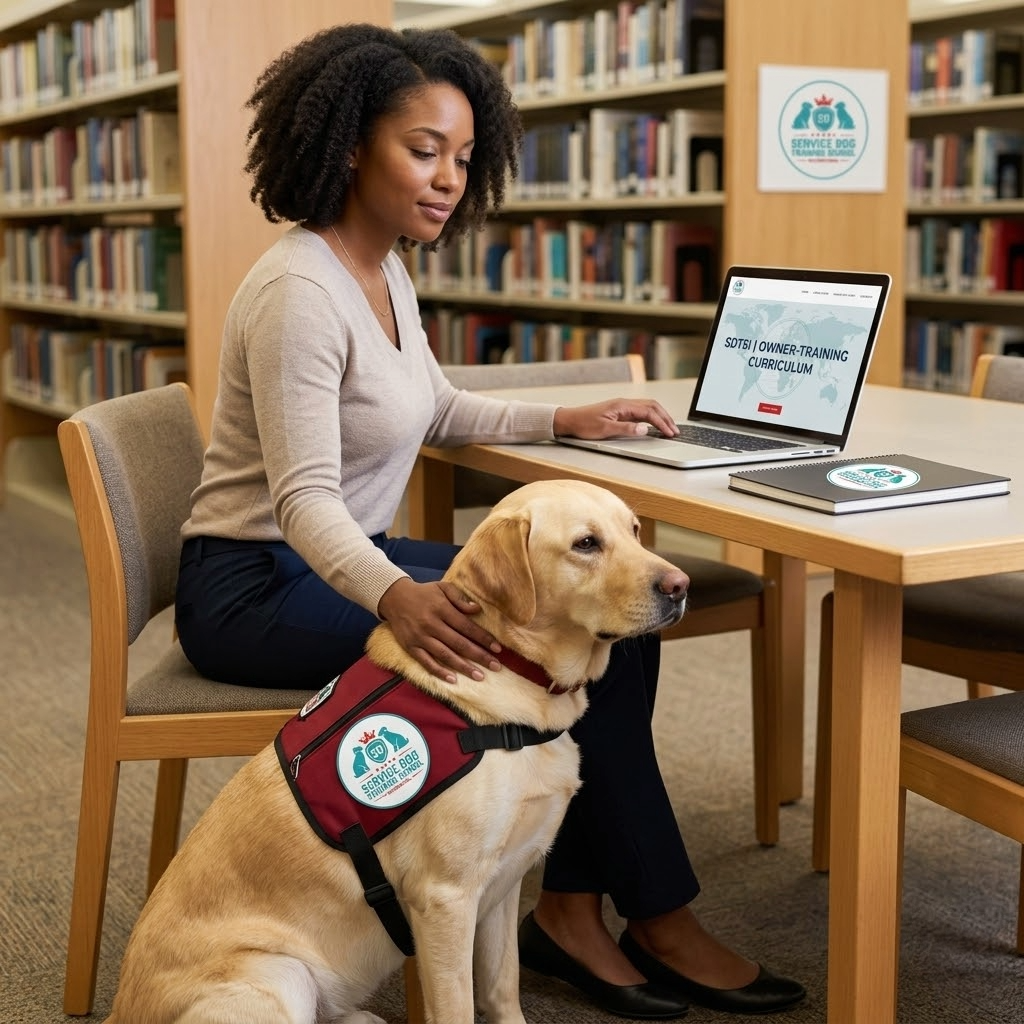
The rise of comprehensive, online distance-learning programs has democratized service dog training. Handlers no longer have to guess or rely on fragmented internet videos. They can now enroll in structured, step-by-step curriculums designed by certified animal behaviorists.
High-quality online schools offer the perfect middle ground: the affordability and flexibility of owner-training, combined with the safety, structure, and 24/7 support of professional trainers. Handlers can submit videos for evaluation, track their progress in real-time, and ensure their dogs meet the strict public access standards required by law.
Conclusion
Choosing to train a service dog is a massive commitment that requires patience, consistency, and dedication. However, for a growing number of people, the benefits far outweigh the challenges. This is where accessible education platforms like Service Dog Training School International (SDTSI) bridge the gap.
By offering a comprehensive catalog of specialized online programs at https://www.servicedogtrainingschool.org/, SDTSI provides handlers with the professional framework needed to succeed from home. Owner-training through these guided courses offers immense cost savings compared to acquiring a pre-trained dog from a traditional agency. Furthermore, the 100% online curriculum allows handlers to train entirely at their own pace, removing the pressure of strict deadlines and allowing the dog to learn comfortably.
By removing the barriers of extreme costs and endless waitlists, structured owner-training is making life-saving canine assistance a reality for those who need it most. Armed with the right educational tools and professional support, handlers are proving that the most effective service dog teams are often built right at home.