




Traveling with a service dog gives you independence, comfort, and confidence, but it doesn't take away all the typical stress of planning and booking a trip.
Every time you click the "reserve" button on a hotel website, a specific question probably pops into your head: What will check-in be like, and is my final bill going to include an unexpected pet fee?
Service dogs are essential aids, not just pets, but making that difference clear for a positive and stress-free hotel stay isn't always easy.
In today’s article, we’ll clear up all the confusion about fees, deposits, and policies. By the time you finish reading, you’ll know what hotels can and cannot ask, so you can just focus on enjoying your journey with your beloved furry friend!
Nature of Service Dogs and Their Legal Protection
To understand hotel policies, let’s first define what a service dog is. Service dogs are highly trained to perform specific tasks that are directly related to a disability. These tasks can vary from person to person and might include helping with mobility and balance issues, guiding a person with low vision, alerting to changes in the person’s scent due to an oncoming medical episode, providing deep pressure therapy for a calming effect during an anxiety episode, panic attack, or PTSD flashback, retrieving medication, and more.
What is important is that the individual is eligible for a service dog and that the dog is individually trained to perform specific tasks for them. If you are wondering what ‘eligible’ exactly entails, you may want to review the definition of a ‘ person with a disability’ according to the Americans with Disabilities Act (ADA).
This specific, life-changing work is what separates service dogs from companion animals, such as emotional support animals and therapy animals, who provide comfort and companionship but are not task-trained.
Since service dogs are considered medical aids, they are protected under laws in the US like the ADA, the Fair Housing Act (FHA), and the Air Carrier Access (ACAA). If you are based outside the US, you may want to know that the Equality Act 2010 protects service dogs (known as “assistance dogs” in Europe and Australia) in the UK, the Canadian provincial laws protect their access rights on a regional level; the Disability Discrimination Act 1992 applies to assistance dogs in Australia; the Act on Assistance Dogs for Persons with Physical Disabilities in Japan, etc.
This means handlers have the right to access public
places, including hotels, and these businesses generally cannot
charge extra fees or deny entry based on the dog's presence alone.
Ultimately, service dogs are essential partners that allow handlers
to live independently and safely.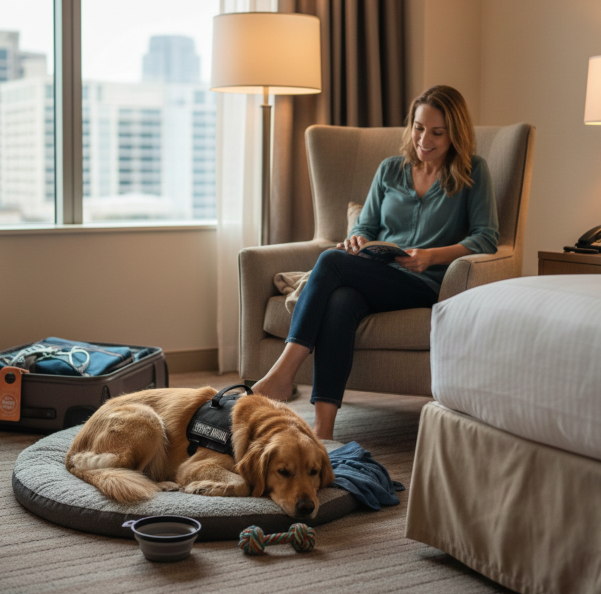
Hotel Policies and Service Dogs
Hotels are required by law to accommodate service dogs without charging extra fees. Unlike pets, which may come with nightly charges, deposits, or restrictions, service dogs are considered part of their handler’s support system and not the guest’s personal animal. Charging a fee simply because a service dog is present is generally not allowed under disability laws.
The key difference between a service dog and a regular pet is their purpose. While pets are also our beloved family members, they are not specifically trained to perform valuable and even life-saving tasks. This distinction is what allows service dogs to be exempt from fees and certain restrictions that apply to pets.
However, hotels typically request advance notice from guests with service dogs. This helps staff make reasonable accommodations, prepare the room, and ensure the stay is comfortable. It’s important to clarify, though, that this is not a reason for hotels to impose a deposit or pet fee.
In most cases, documentation is not legally required in the US, although some international hotels or chains may ask for a letter from a healthcare professional or other proof to confirm the dog’s role. This specifically applies to situations where the dog’s role as a service animal is not immediately visible.
It is always best to check the policy of the hotel where you plan to stay in advance and communicate your needs clearly. This can help prevent misunderstandings during check-in.
Another important thing to keep in mind is your dog’s behavior. How your dog behaves and responds to your cues is what ultimately proves they are a trained service dog.
For travelers, it can also be helpful to carry an identification card or harness indicating the dog’s role. This is not legally required in the US, but it often speeds up check-in and helps teams have a more positive experience.
Remember, though, that documentation alone (without proper training) isn't enough to justify a service animal's acceptance and the waiving of pet fees.
Additionally,
keeping your dog under control at all times, especially in common
areas, ensures a smooth experience and demonstrates respect for hotel
policies.
What Can Hotels Ask Service Dog Handlers?
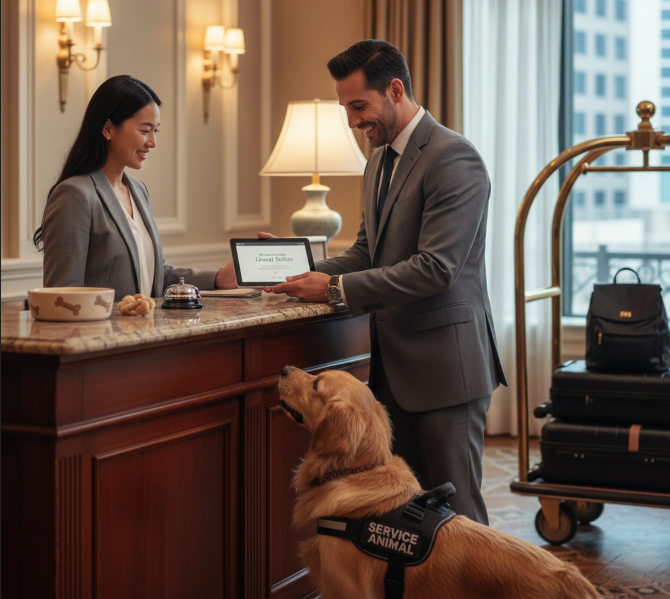
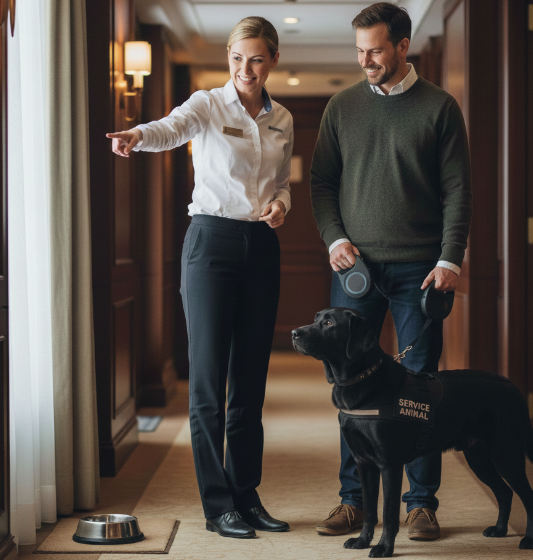
When you approach the front desk with your service dog, you can feel confident knowing what the staff is legally allowed to ask.
Under the ADA, they are allowed to ask you two questions:
1. Is your dog a service dog required due to a disability?
2. What tasks has the dog been trained to perform?
They are not allowed to ask for documentation, medical records, or any kind of ID card for your dog. However, teams sometimes report issues with hotel staff due to the lack of proof of training, identification, or a medical letter. We advise you to consider carrying supporting documents.
It’s also important to clarify that it’s a bit different when traveling outside the US. International rules vary, and some hotel chains might ask for a certificate as proof of training. In some cases, it may need to be issued by specific organizations, a doctor's note, or other proof. The most important thing to remember is this: Hotels are not allowed to charge you extra or turn you away because you have your service dog.
To make things go smoothly, we recommend checking local laws first. Then, contact the hotel staff ahead of time, explain that you'll bring a service dog, clarify the tasks they perform, and ask about any specific requirements the hotel may have.
Situations Where Fees May Apply
Although hotels cannot charge pet fees or deposits for service dogs, there are a few situations where charges might still apply. These charges are never for the dog’s presence, but for specific incidents, just as they would be for any guest.
For example, if a service dog causes damage to the room or property, the hotel is allowed to charge for the actual cost of repairs or cleaning.
It is also important to note that service dogs must remain under control at all times. If a dog behaves aggressively, is not housebroken, or repeatedly disrupts other guests, the hotel has the right to exclude the dog from the premises. Even then, they must still allow the handler to stay.
Situations like this are unusual, especially with properly trained service dogs, but handlers should still be familiar with the policy.
Bringing along familiar items that can help your dog settle, such as a cozy blanket, their favorite toy, a piece of your clothing with your scent, or a mat, can prevent stress-based behaviors and make the hotel room feel more like home. It's also helpful to take your dog on a short walk before entering the lobby or room. This is mainly because a short stretch often results in calmer and more focused behavior.
Keep in mind that clear communication with hotel staff can also help them support you better during your stay.
Tips for Traveling With a Service Dog
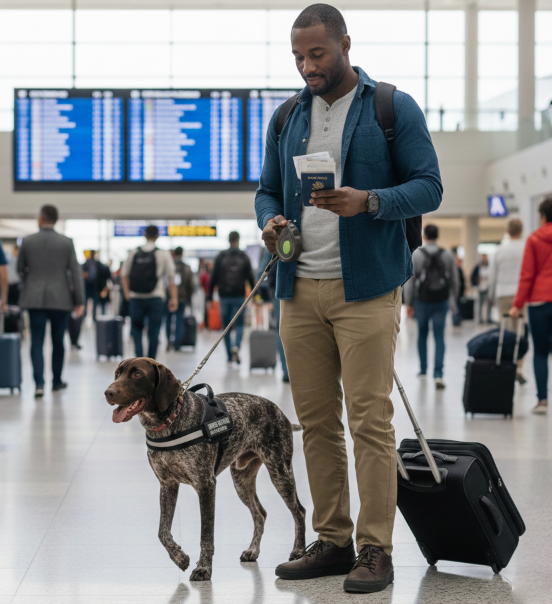
To ensure your trip with a service dog is smooth and enjoyable, you should plan ahead.
Booking your stay early and letting the hotel know that you will be arriving with a service dog is strongly recommended. Although they cannot charge extra fees, this step allows staff to prepare a suitable room and address any specific needs, such as access to outdoor areas for relief breaks.
If you are traveling internationally, make sure you have the correct paperwork for your destination. Different countries have different requirements, and having documents organized before your trip can prevent delays at check-in.
Even if not legally required in the country you are visiting, keeping a medical letter, training certificate, or ID card can make interactions easier, especially with staff who may not be familiar with service dog laws.
During your stay, bring items that help your dog feel settled, such as a mat, favorite toy, or travel bowl. A familiar scent can make a new room feel comfortable right away.
It's also helpful to maintain your dog’s routine as much as possible, including feeding times, exercise, playtime, and rest. A well-rested dog tends to be calmer in busy hotel environments.
If your paw companion has a specific bathroom schedule or prefers certain surfaces, ask the staff about suitable outdoor spots around the property. Many hotels are happy to point out quiet areas that are suitable for relief breaks. Taking a short walk around the hotel as soon as you arrive can also help your dog get used to the new environment and reduce any initial excitement.
Last but not least, staying polite and confident when speaking with staff goes a long way. Most hotel employees want to be helpful, and a friendly conversation can set a positive tone for your entire stay.

Common Misconceptions About Service Dogs in Hotels
There are quite a few misunderstandings about service dogs, especially when it comes to hotel stays.
One of the most common myths is that service dogs must follow the same pet rules as other animals. In reality, service dogs are not considered pets, which means pet fees, weight limits, and breed restrictions do not apply. A quick note here: If raising certain breeds is banned by your government, please make sure to become familiar with the law and how you might be able to train a dog of such a breed as a service dog.
Some guests and even some staff members may not know this, so having a basic understanding of your rights can help you handle these situations comfortably.
Another misconception is that hotels can ask for medical proof or certification before allowing a service dog to enter. In the United States, this is not allowed, and other countries, like the UK, follow similar guidelines. Staff can ask only the legally permitted questions, and nothing beyond that. Knowing this can make check-in feel much less intimidating, especially if you have had challenges at other businesses in the past.
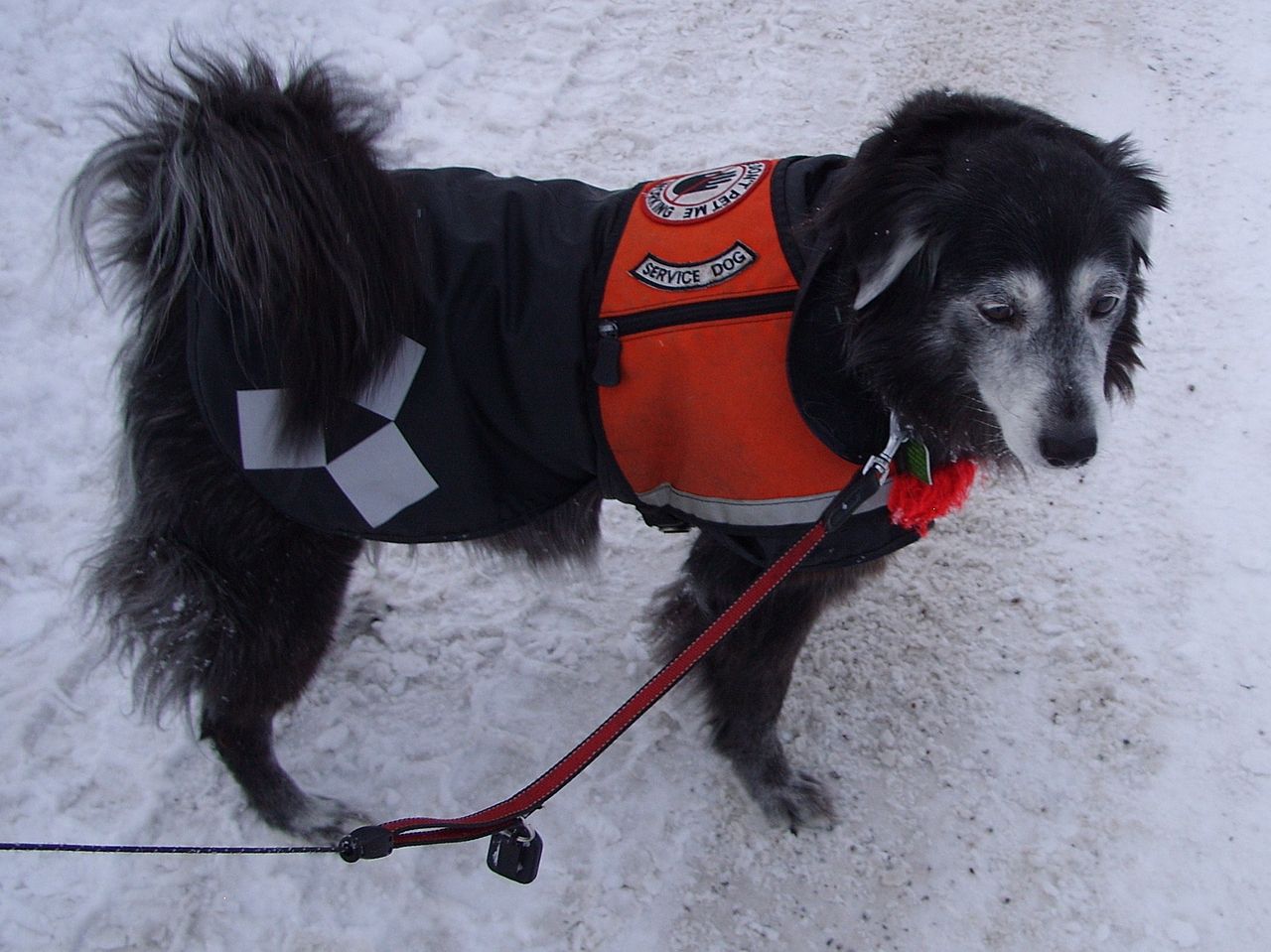
Some people also believe that a service dog must wear a vest or carry official identification. While vests can help prevent unwanted questions, they are not legally required in many places. What matters most is the dog’s training and behavior. A calm, well-mannered service dog often speaks for itself.
If you ever encounter confusion, staying patient and offering a brief explanation usually helps. Many staff members are simply trying to follow the rules as they understand them, and a friendly conversation can clear things up quickly.
Traveling with a service dog should feel comfortable and stress-free, and understanding your rights and responsibilities as part of a service dog team is an important part of that experience. Hotels are required to welcome service dogs without charging extra fees, and they must treat your dog as an essential partner rather than a pet. Knowing what staff can and cannot ask, and being aware of the situations where additional charges might apply, can help you move through check-in with confidence.