



When most people think of service dogs, breeds like Labrador Retrievers, Golden Retrievers, Poodles, and German Shepherds usually come to mind.
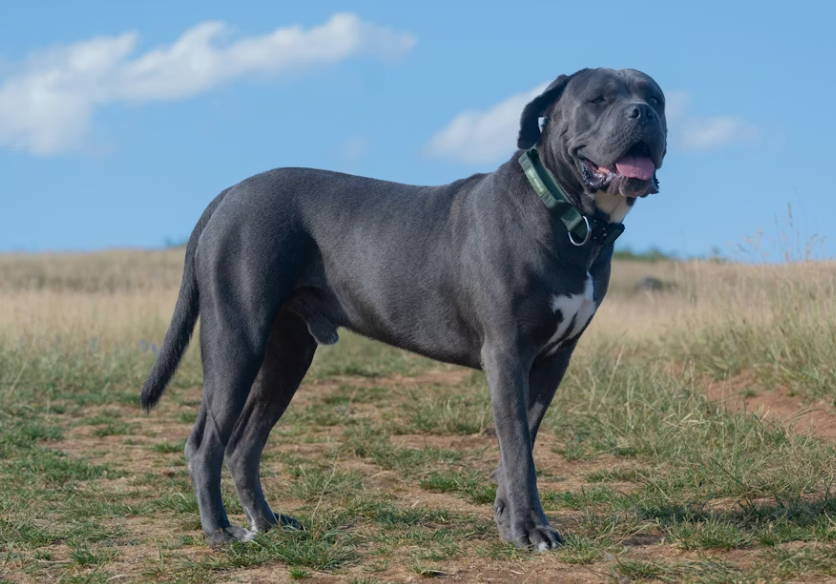
But what about less traditional breeds, like the Cane Corso? Known for their size, strength, and protective instincts, Cane Corsos are not likely the first breed you’d picture in a service dog role, are they? We often associate these imposing dogs with guarding, but what if they have the right temperament for the job and undergo proper training?
Today, we’ll explore whether Cane Corsos can truly make reliable service animals, and what factors potential handlers should consider before choosing this breed.
Get to Know the Cane Corso
Before we determine if Cane Corsos have potential as service animals, we need to fully understand the breed's personality.
Dogs of this breed are inherently confident, loyal, and very intelligent. This combination of traits makes them quick learners when it comes to formal training.
They also form deep and lasting bonds with their handlers, and their strong sense of attachment is what likely fuels their work ethic. Cane Corsos genuinely take their "jobs" seriously, whether that job is guarding the home or performing life-saving tasks. This sense of responsibility can be considered a great asset in a service dog, as they naturally strive to meet their handler’s expectations.
However, the qualities that make them loyal also introduce a challenge! Dogs of the Cane Corso breed are inherently strong-willed and naturally protective. Without clear, consistent guidance, that powerful instinct to guard can quickly evolve into over-assertiveness or stubbornness in public settings.
This is why early socialization, consistent training, and a confident handler who understands their dog are essential for training to succeed. When handled and channeled effectively, the dog’s focus, loyalty, and intelligence can create a capable and reliable service animal. Neglecting these early developmental steps can make daily public access challenging, creating hurdles for both dog and handler.

What Does the Law Say About Service Dogs?
It is essential to clarify that when it comes to service dogs, the law doesn’t discriminate by breed or type. Any dog, whether big or small, can qualify as a service dog as long as they are individually trained to perform specific tasks directly related to a person’s disability. You may be interested in reading the Americans with Disabilities Act (ADA)’s definition of a ‘service animal’:
“Under the ADA, a service animal is defined as a dog that has been individually trained to do work or perform tasks for an individual with a disability. The task(s) performed by the dog must be directly related to the person’s disability”.
And this is how the ADA answers the question about dog breeds that can become service animals:
“The ADA does not restrict the type of dog breeds that can be service animals”.
Let’s also take a look at how the Equality Act 2010 in the UK defines an assistance dog:
“Assistance dogs are not pets. They are an aid to provide additional support or assistance to a disabled person.
Thousands of disabled people rely on an assistance dog to help them with day to day activities that many people take for granted. It is not only blind people that are helped by assistance dogs.
Assistance dogs are also trained to help people with hearing difficulties, epilepsy, diabetes, physical mobility problems and more. Assistance dogs carry out a variety of practical tasks for people as well as supporting their independence and confidence”.
According to the Disability Discrimination Act 1992, an assistance animal is a dog or other animal:
“accredited under a law of a State or Territory that provides for the accreditation of animals trained to assist a persons with a disability to alleviate the effect of the disability; or
accredited by an animal training organisation prescribed by the regulations for the purposes of this paragraph; or
trained:
to assist a person with a disability to alleviate the effect of the disability; and
to meet standards of hygiene and behaviour that are appropriate for an animal in a public place”.
If you are unsure about the terms “service dog” and “assistance dog,” please note that they are interchangeable. The distinction is mostly regional, as “service dog” is commonly used in North America, while “assistance dog” is the preferred term in Europe and Australia.
The tasks a service dog can perform may widely range from person to person. Common service dog tasks are:
- Guiding a visually impaired person;
- Alerting an individual to the onset of a medical episode, such as changes in the blood sugar levels, seizures, or cardiac issues;
- Interrupting anxiety or panic episodes;
- Assisting with mobility.
Please keep in mind that not all tasks service dogs perform are immediately apparent so you should also be thoughtful and considerate when interacting with service dog teams.
Legally, public spaces such as hotels, restaurants, and grocery stores, are required to allow service dogs access. They are also prohibited from charging any extra fees or deposits for the dog.
However, service dogs must behave appropriately, which means they can’t be disruptive, aggressive, or unmanageable. Otherwise, businesses have the right to exclude them from their premises.
It’s also important for handlers to know what questions staff may and may not ask to verify the legitimacy of their dog as a service animal. According to the ADA, businesses have the right to ask two questions:
1. Is this a dog required due to a disability?
2. What tasks has the dog been trained to perform?
Getting familiar with these laws makes public trips easier and helps reduce conflict. It’s especially important for handlers with large service dogs, like the Cane Corso, which are likely to turn heads, to be aware of their rights. This is the best way to guarantee a positive experience in public.

Can a Cane Corso Meet The Requirements for Service Animals?
The short answer is yes! A dog of the Cane Corso breed can absolutely make an excellent service dog, thanks to many qualities they possess.
As we mentioned earlier, they are intelligent, quick learners, and respond well to formal training when approached with consistent guidance and positive reinforcement. They are known for being extremely loyal, which helps them form strong bonds with their handlers. These qualities also contribute to their motivation to work hard because they want to please them.
Additionally, their impressive size and strength give them a clear physical advantage for tasks that require stability, bracing, or physical support.
However, it’s also important to acknowledge the flip side. Cane Corsos are naturally protective and can be reserved around strangers, which could easily be mistaken for reactivity or aggression if they are not socialized properly from a young age. Their strong guarding instincts and tendency toward stubbornness require handlers to be patient and consistent. Without early socialization and clear rules, their natural assertiveness could turn routine public outings into difficult situations.
For the right person, specifically someone experienced, confident, and able to set boundaries, a Cane Corso can truly excel as a service dog! It’s crucial to remember, though, that not every Cane Corso (or every dog in general) will have the temperament necessary for service work. Dogs are unique individuals with their own temperaments and personalities.
While breed characteristics provide a good overview of a dog’s size, energy level, shedding, and need for physical and mental stimulation, there will always be deviations from these generalized traits. We advise future handlers to spend time observing a dog’s behavior, preferably, in various environments before making a commitment.
Service Dog Roles Suited for the Cane Corso
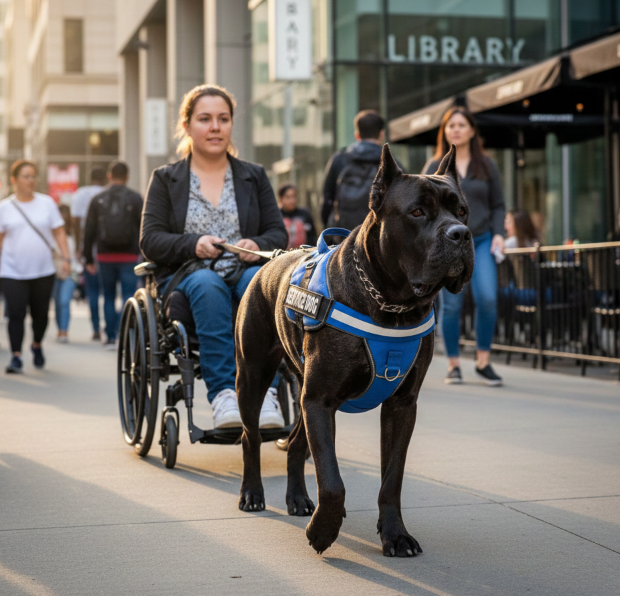
The Cane Corso is well-suited to certain service dog roles, particularly those that require strength, stable temperament, and intense devotion to the handler.
With that said, they become outstanding mobility service dogs, performing tasks such as:
Bracing to prevent falls
The dog stabilizes their body and acts as a solid anchor or counterweight, which allows the handler to lean on them temporarily to regain balance or prevent a sudden loss of stability.
Providing counterbalance on stairs or uneven surfaces
The service animal wears a rigid harness that the handler holds, providing a steady point of support and counter-leverage while navigating tricky inclines, steps, or shifting terrain.
Helping their handler stand up from a chair, the floor, or a low seat
The dog plants their feet firmly and remains still while the handler uses the rigid harness or specific contact points on the dog's body to pull or lever themselves to a standing position.
Giving forward momentum support
The handler holds a rigid harness while the dog walks steadily ahead, using their body mass to shift the handler's weight slightly forward. This reduces pressure on joints and makes longer walks significantly easier.
Pulling a wheelchair when properly trained and equipped
The dog is fitted with specialized equipment that allows them to safely pull a manual wheelchair over flat or slightly inclined ground. This offfers the handler independence and reduces physical strain.
Mobility tasks would be the best fit for a dog with the strength of a Cane Corso.
However, this doesn’t mean they can’t excel in other types of tasks as well. For example, in psychiatric service work, the breed’s size and calm demeanor make it ideal for:
Providing deep pressure therapy
The weight and solid build of these dogs can create a comforting effect when they rest their chin, head, or upper body across the handler’s lap or legs.
Providing other types of tacticle stimulation
Displaying a trained behavior such as nose-nudging or giving a kiss to interrupt anxiety attacks, panic episodes, PTSD flashbacks, or dissociation;
Guiding the handler away from stressful environments
A Cane Corso can be trained to lead the handler to a safe space when they sense rising anxiety.
Alerting to signs of anxiety or dissociation
Many breed representatives are naturally observant and can be trained to pick up on changes in their handler’s emotional and behavioral patterns, including breathing and body language.
Creating space in crowded areas
Their size allows them to position themselves in a way that prevents people from entering the handler’s personal space, which can be especially helpful for individuals with PTSD or severe social anxiety.
Waking the handler from nightmares
Cane Corsos can be trained to gently nudge, paw, or lick their handler to interrupt night terrors or panic that occurs during sleep.
These impressive canines can also become reliable medical alert dogs even though they are not a common breed used for this type of work. Medical alert training is based on scent training and long-muzzled breeds like the Poodle, Golden Retriever, German Shepherd and Border Collie are generally more preferred and better suited for this type of work.
However, if you are a proud dog parent of a Cane Corso and suffer from medical issues, you may consider finding out your dog's aptitude for scent training. If your furry friend enjoys scent games and is strongly attached to you, then they may have the potential needed for medical alert work!

Who Should Consider a Cane Corso as a Service Dog?
While a Cane Corso can be an incredible service partner, they aren't the right match for every handler.
Since these dogs have strength, imposing size, and natural protective instincts, they need a handler who is ready to take the lead. They thrive with someone who is confident, patient, and able to give calm and consistent direction. Those qualities will definitely help handlers succeed with this breed, especially during essential training steps like socialization and public access.
The ideal handler for a Cane Corso would be someone who is:
- Physically capable and able to manage a large, powerful dog comfortably.
- Structured and understand the importance of routine, and consistent, ongoing training. Cane Corsos genuinely love having a job!
- Engaged and enjoys working closely with their dog and regularly reinforcing tasks; this builds that strong, reliable partnership they crave.
For handlers who look for a loyal, focused, and deeply bonded partner, a Cane Corso can be a great fit thanks to the level of emotional reassurance and physical support they offer!
If you are truly prepared for the commitment, you may be able to turn your partnership into a powerful working team built on mutual respect and trust.
This breed is not suitable for handlers who prefer a low-maintenance dog or someone who feels uneasy managing a dog whose size naturally draws attention in public.